
What's That Noise in My Attic at Night? A San Diego Homeowner's Guide to Identifying the Animal
You're lying in bed, and you hear it again. A scratch. A scrape. Something is moving across the ceiling above your head. In San Diego, that sound almost always means one of five animals has found a way into your attic, and the kind of noise you hear, plus the time you hear it, will tell you which one. This guide walks through how to identify the intruder by sound, why it matters more here than in most parts of the country, and what to do before the problem gets bigger.
Quick Answer: What Animal Is in My Attic?
In San Diego, fast scratching and scampering between dusk and dawn almost always points to roof rats, the most common attic invader in the county. Heavy thumping or rolling sounds at night usually mean a raccoon. Daytime scampering and chewing typically point to squirrels. Slow, heavy walking usually means an opossum. And a soft fluttering or chirping at dusk is almost always bats.
Key Takeaways
- Time of day is the single biggest clue. Nocturnal sounds point to rats, raccoons, opossums, or bats. Daytime sounds usually mean squirrels.
- Roof rats are the dominant attic pest in San Diego County, and they are active year-round because of our mild climate.
- Ignoring the noise is the costliest mistake. Wildlife in attics chew wiring, contaminate insulation, and create real health risks within weeks.
Why Attic Noises Matter More in San Diego Than Most Cities
Most of the country gets a winter break from wildlife pressure. We don't. San Diego's mild coastal climate keeps roof rats, raccoons, opossums, and bats active twelve months a year. According to the University of California Statewide IPM Program, roof rats prefer warm climates and coastal ecosystems and typically nest in enclosed and elevated spaces, such as attics, wall voids, ceiling voids, and cabinets (UC Statewide IPM Program). That description fits almost every San Diego home.
Add in fruit trees, bougainvillea, ivy, and palms, and you have what wildlife biologists call a year-round food and shelter highway running straight from the canyon to your eaves. Once an animal is inside, the damage compounds quickly. Chewed wiring is a fire risk. Soiled insulation loses its R-value. And there are real health risks tied to wildlife droppings in attic spaces, including hantavirus, which the CDC notes can spread when fresh urine, droppings, or nesting materials of an infected rodent are stirred up and inhaled (Centers for Disease Control and Prevention).
How to Identify the Animal by Sound and Time of Day
Here is how to read the noises step by step. Listen carefully for two or three nights before you draw a conclusion, because a single sound is rarely diagnostic on its own.
1. Note the time you hear it.
Almost every attic identification starts here. If the noise is loudest between dusk and dawn, you are dealing with a nocturnal animal: rat, raccoon, opossum, or bat. If you mostly hear it during daylight hours, especially mid-morning and late afternoon, you are most likely dealing with a squirrel.
2. Listen for the weight of the movement.
Light, fast scampering that sounds like marbles rolling across plywood points to a small rodent, almost always a roof rat or house mouse. Slow, heavy footsteps that sound like someone walking on the ceiling point to a raccoon or opossum. A raccoon will often sound like it is dragging something, because it sometimes is.
3. Listen for the texture of the sound.
Scratching and gnawing point to rodents chewing on wood, wire, or insulation. Thumping and rolling point to a raccoon shifting position or moving young. Soft, leathery fluttering at dusk or just before dawn points to bats leaving or returning to a roost. A high-pitched chirp or squeak in the same window almost confirms it.
4. Note the location.
Rodents tend to travel along the same wall lines and rafters night after night, so the noise will move along a predictable path. Raccoons stay in one heavy spot. Bats cluster near the gable end or eaves. Squirrels are active near roof penetrations and vents.
Is It a Rat, Raccoon, Squirrel, Opossum, or Bat?
Once you have a few nights of observation, match what you heard to one of these five profiles.
Roof rats (the most common San Diego attic invader)
Fast, light scratching and scampering after sunset, especially between 9 p.m. and 4 a.m. You may also hear gnawing on wood or wire. Roof rats are excellent climbers and use power lines, fences, fruit trees, and ivy to reach your roofline. They squeeze through gaps as small as a quarter inch. If the noises are nocturnal, fast, and persistent, this is your most likely culprit, and you should be looking into professional rodent control in San Diego sooner rather than later.
Raccoons
Heavy thumping, rolling, and slow walking, almost always at night. Raccoons are large enough that the ceiling sound is unmistakable. You may also hear chittering, growling, or the cries of kits in spring. Raccoons enter through damaged vents, loose soffits, or torn screening, and a mother raccoon raising young will defend the space aggressively.
Squirrels
Daytime scampering, chewing, and rolling sounds, usually most active in the morning and again in late afternoon. Squirrels chew constantly because their teeth never stop growing. If you only hear noise during the day and never at night, squirrels are the most likely answer.
Opossums
Slow, heavy walking at night with long pauses in between. Opossums are slower than raccoons and tend to drag their tail, which produces a distinctive scraping sound along the rafters. They are usually solitary and quieter than raccoons but make a much heavier sound than rats.
Bats
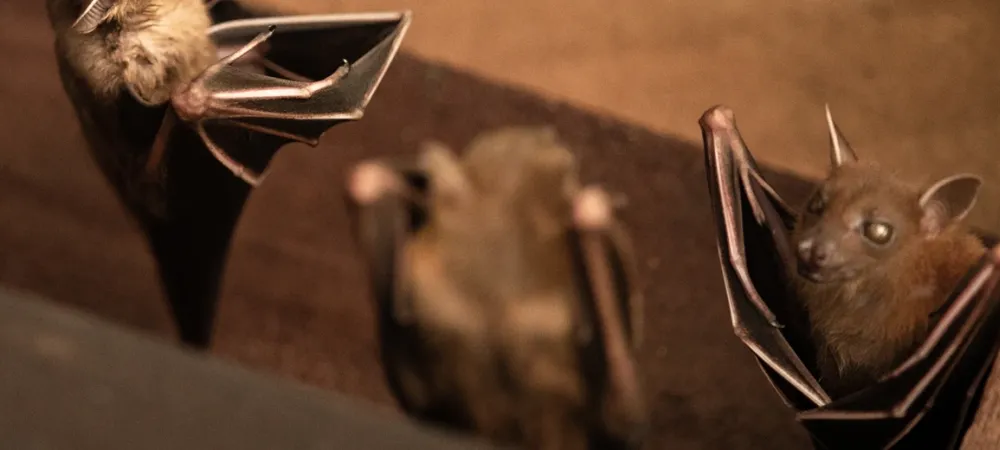
Soft fluttering, scratching, and high-pitched squeaks, with most activity right at dusk and just before dawn. You may notice a sharp ammonia odor from accumulated guano. If you suspect bats, read up on the early signs of a bat colony in your attic before you do anything else, because California protects bats and there are strict rules about when and how they can be excluded.
Why Roof Rats Dominate San Diego Attic Calls
Of every animal on the list above, roof rats deserve special attention because they are far and away the most common cause of attic noise in San Diego County. They are also the species that national wildlife blogs rarely address well, because roof rats are mostly a coastal and Sun Belt problem.
UC Cooperative Extension confirms that the roof rat is the more common species at present on the Central Coast and appears to be the primary cause of current local problems (UC Statewide IPM Program). The same is true here. Roof rats thrive on the same things San Diego homeowners love: citrus trees, avocado trees, dense ornamental hedges, and palm fronds. They run power lines and fence tops at night and slip into attics through the smallest construction gaps.
California's tightening rodenticide rules, including AB 1788 and AB 2552, have also restricted what homeowners and even some professionals can use, which makes accurate identification and proper exclusion more important than ever.
Prevention Tips: Keep Wildlife Out of Your Attic for Good
The single most effective long-term solution is exclusion: physically blocking every gap an animal could use to get in. Trapping alone never solves the problem because new animals will move into the same opening. A few practical steps every San Diego homeowner should take:
- Trim tree branches back at least six feet from the roofline. Roof rats and squirrels use overhanging limbs as on-ramps.
- Pick up fallen fruit weekly during citrus and avocado season. A single tree dropping fruit is a wildlife buffet.
- Cap chimneys and screen all roof vents, gable vents, and dryer vents with rust-resistant metal mesh, not plastic.
- Seal any opening larger than a quarter inch using steel wool, hardware cloth, or sheet metal. Rats can chew through caulk, wood, foam, and plastic.
- Thin dense ground-cover plantings like ivy and bougainvillea near the foundation, and keep at least two feet of space between shrubs and the wall of your home.
- Inspect roof tiles, soffits, and fascia boards twice a year for cracks or storm damage, especially after winter rains.
For a permanent fix, professional wildlife exclusion and prevention identifies and seals every entry point with materials that animals cannot chew through, and the work is typically backed by a warranty.
When to Call a Wildlife Removal Professional
If you have heard noises in your attic for more than a few nights, it is time to call. Wildlife problems do not resolve themselves, and the longer an animal is inside, the more it costs to repair the damage. Call a professional immediately if you notice any of the following:
- Repeated nocturnal noise from any animal larger than a rodent
- Visible droppings, urine staining, or chewed wiring
- A strong ammonia or musky odor coming from the ceiling
- Daytime activity that suggests a nesting mother raising young
- Any signs of bats, which require licensed handling under California law
DIY trapping is also legally and practically risky in California. Many homeowners try it before calling and end up worse off, which is exactly why DIY wildlife trapping often fails in California. The California Department of Public Health also warns that exposure to dried rodent waste in enclosed attic spaces is a primary route of hantavirus infection, recommending that homeowners avoid disturbing contaminated areas without proper protective equipment (California Department of Public Health).
What to Do Right Now if You Hear Something in Your Attic Tonight
Do not go up there alone in the dark. Do not put out poison, especially if you have pets or small children. And do not assume it will go away on its own. Note the time of day, the type of sound, and the location, then call a professional inspector who can confirm the species and recommend humane removal and exclusion.
At Wildlife Removal Services, we have spent 18 years handling exactly this problem for San Diego County homeowners, and same-day inspections are available when you call before noon. Get a free, no-pressure quote at our online estimate form, or reach our team directly at 619-598-0292 to schedule an inspection of your California home.
Sources
- California Department of Public Health. "Hantavirus Infection." State of California, https://www.cdph.ca.gov/Programs/CID/DCDC/pages/hantaviruspulmonarysynd…. Accessed 30 Apr. 2026.
- Centers for Disease Control and Prevention. "About Hantavirus." U.S. Department of Health and Human Services, 13 Mar. 2025, https://www.cdc.gov/hantavirus/about/index.html.
- University of California Statewide IPM Program. "Pest Notes: Rats." UC Agriculture and Natural Resources, https://ipm.ucanr.edu/home-and-landscape/rats/. Accessed 30 Apr. 2026.